

Evolutionary Biogeography of the Sub-Antarctic Flora
Investigating Gondwanan legacies, long-distance dispersal and evolutionary refugia in Sub-Antarctic island systems.
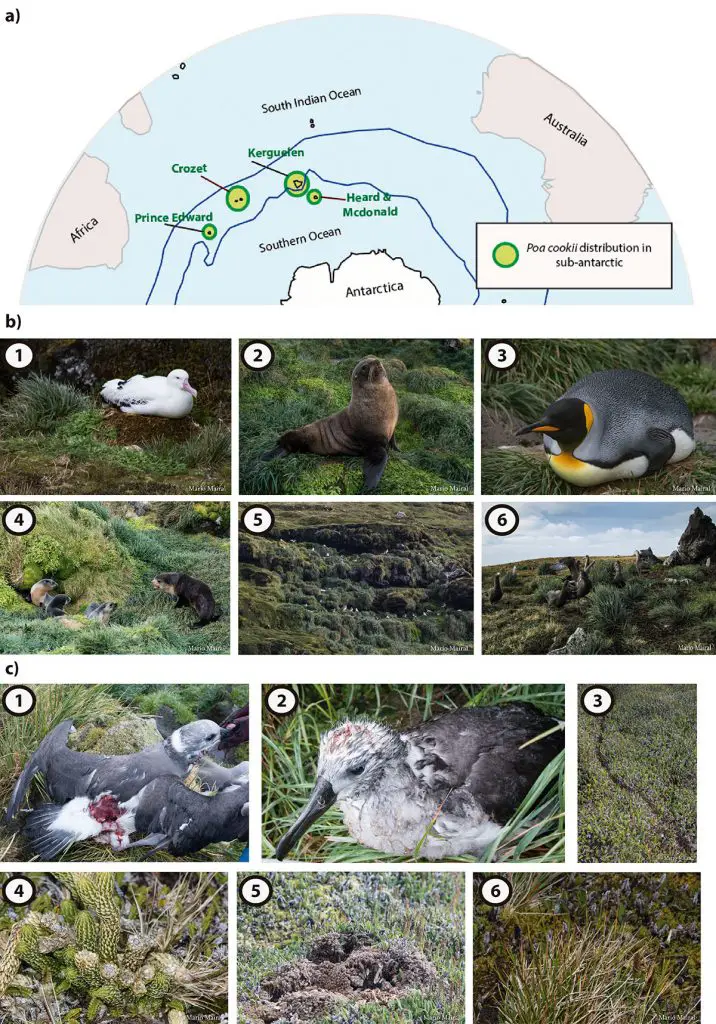
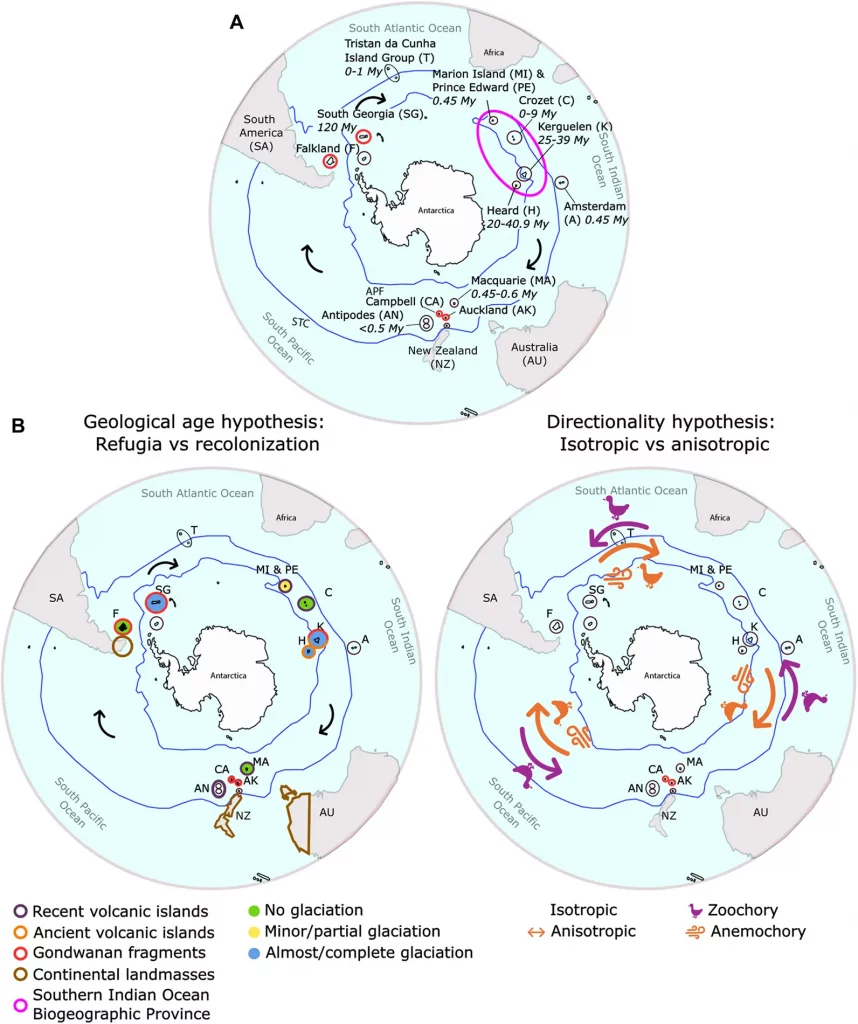
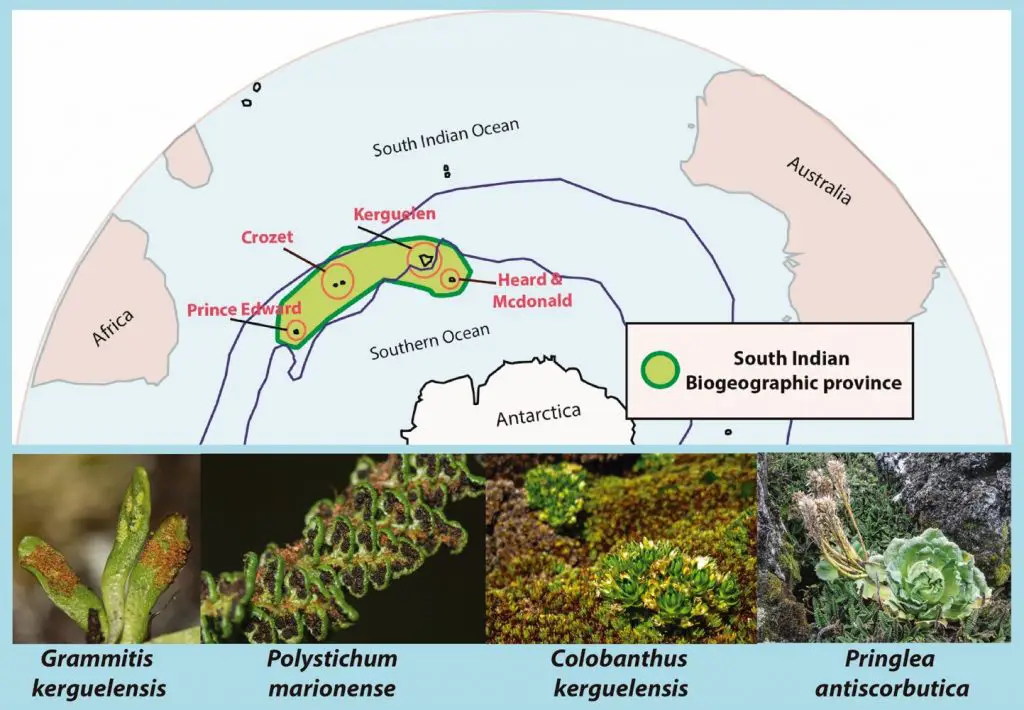
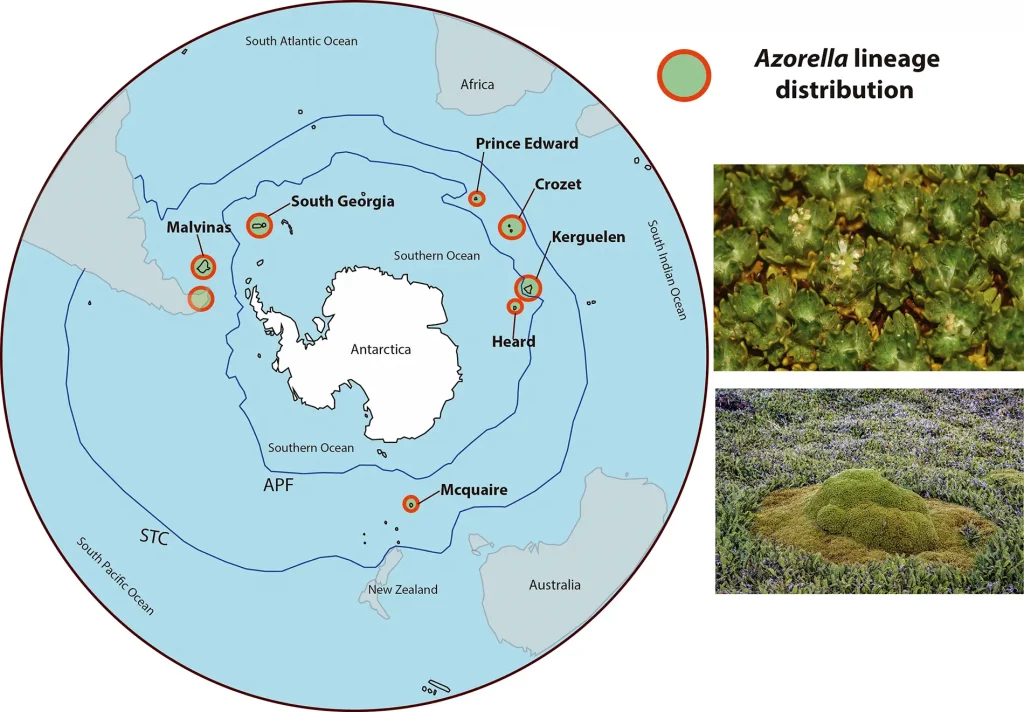
 Sub-Antarctic islands constitute one of the most informative yet least explored systems for understanding plant evolution in the Southern Hemisphere. Their extreme remoteness, contrasting geological origins—from ancient Gondwanan fragments to young volcanic islands—and exposure to persistent west–east oceanic and atmospheric currents make them exceptional natural laboratories for testing long-standing biogeographic hypotheses.
Our research aims to reconstruct the evolutionary and biogeographic history of Sub-Antarctic vascular plants by addressing questions such as:
- How and when did plant lineages colonise some of the most remote islands on Earth?
- What is the relative role of ancient Gondwanan legacies versus long-distance dispersal in shaping present-day floras?
- How have isolation, geological age and environmental extremes influenced diversification and genetic structure?
- Which regions have acted as long-term refugia or hotspots of evolutionary diversity across the Southern Ocean?
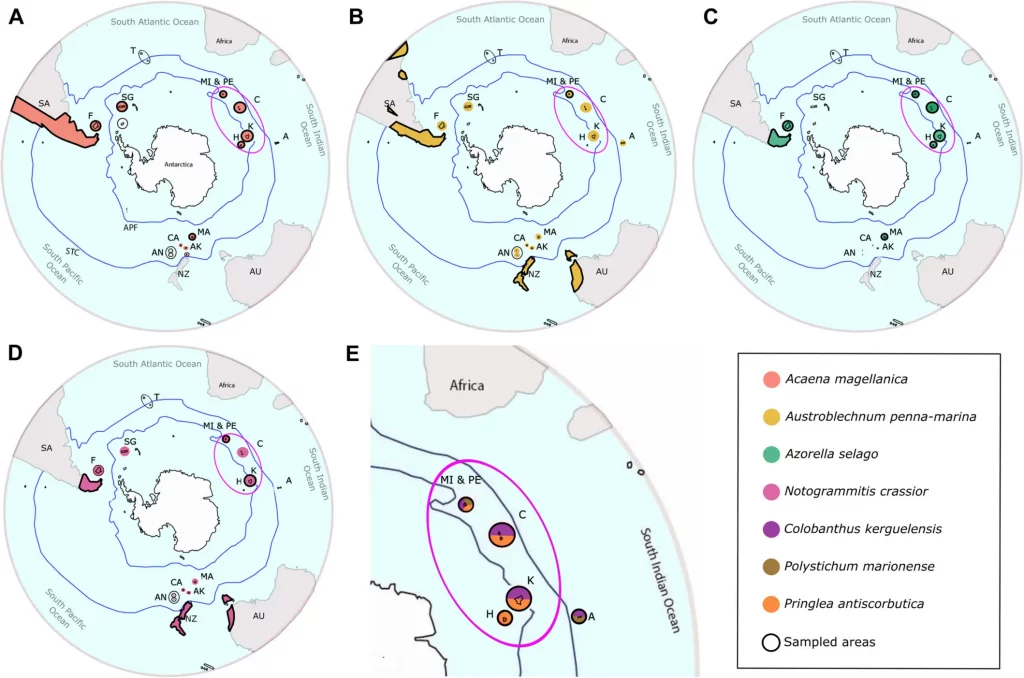
To address these questions, we adopt an integrative framework combining phylogenetics, phylogeography, spatial and temporal modelling, herbarium research and targeted field sampling. By analysing multiple lineages with contrasting dispersal strategies across island systems and southern continental margins, we identify general patterns of connectivity, persistence and diversification.
By revealing patterns of historical connectivity, refugia and evolutionary uniqueness, our research provides an essential evolutionary baseline to support the conservation of Sub-Antarctic plant diversity in a rapidly changing environment.
Projects
Funded research programmes exploring colonisation, diversification and connectivity across the Southern Ocean.
This research line is currently developed through two independent funded projects, SUB-GONDWANA and PANDORA. While both projects focus on Sub-Antarctic plant biogeography and share a common study region, each addresses distinct and complementary scientific objectives.
PANDORA
Gondwana’s Legacy in the Southern Hemisphere: Phylogeography and Evolution of Sub-Antarctic Vascular Plants
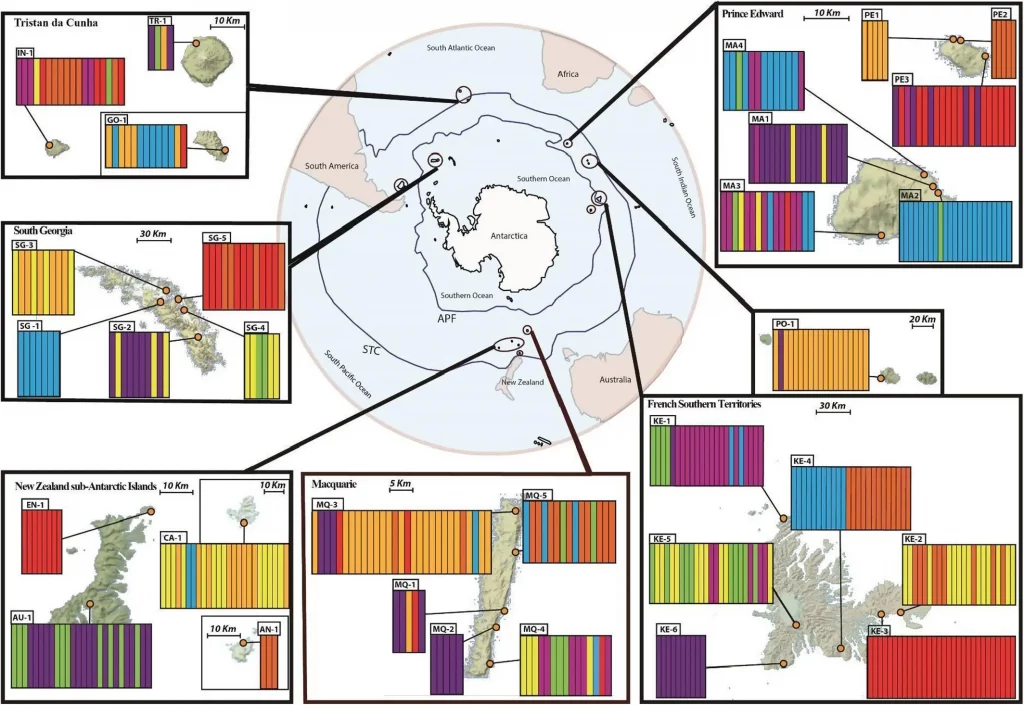
PANDORA (Phylogenetic and Dispersal Origins of Sub Antarctic Flora) examines broad-scale patterns of plant ancestry, diversification and connectivity across the Sub-Antarctic region using comparative, multi-lineage approaches. By integrating phylogenomic data with spatial and temporal models, the project identifies general drivers of plant assembly and regions of high evolutionary significance across the Southern Ocean.
Funder: Doctores Emergentes UCM / Comunidad de Madrid

SUB-GONDWANA
From Gondwana to Remoteness: Tracing the Journey of Vascular Flora in the Sub-Antarctic Archipelagos
SUB-GONDWANA (SUBantarctic Global Origins, Networking Diversity in the Wilderness and Analyses of Archipelagos) focuses on reconstructing the evolutionary history of selected Sub-Antarctic vascular plant lineages through integrated phylogenetic, phylogeographic and spatial analyses across island systems and southern continental margins. The project tests hypotheses on Gondwanan legacies, long-distance dispersal and historical connectivity.
Funder: Ministerio de Ciencia, Innovación y Universidades (MCIN). Gobierno de España.
Talks & Media
Invited talks, outreach presentations and audiovisual material exploring Sub-Antarctic plant evolution, island ecology and field research.
Featured Research Highlights